Equine Gap Year Programme
Experience life with our horses in the heart of the Okavango Delta
Programme Overview
Participants will be immersed in OHS life, with main duties revolving around the horses.
They need to be experienced riders, happy to school young horses who are learning the ropes.
Participants must be willing to lend a hand with the many tasks associated with keeping the herd in top health – this includes daily checks, helping the farrier or vet, and assisting with the treatment of any ongoing veterinary cases.
You must be a quick learner, resilient, and able to use your initiative - camp can be a busy place and we’ll need you to jump in and help without being told.
Unlike many programmes, we only accept one, occasionally two trainees at a time, as we want participants to feel like an integral part of our family run business.
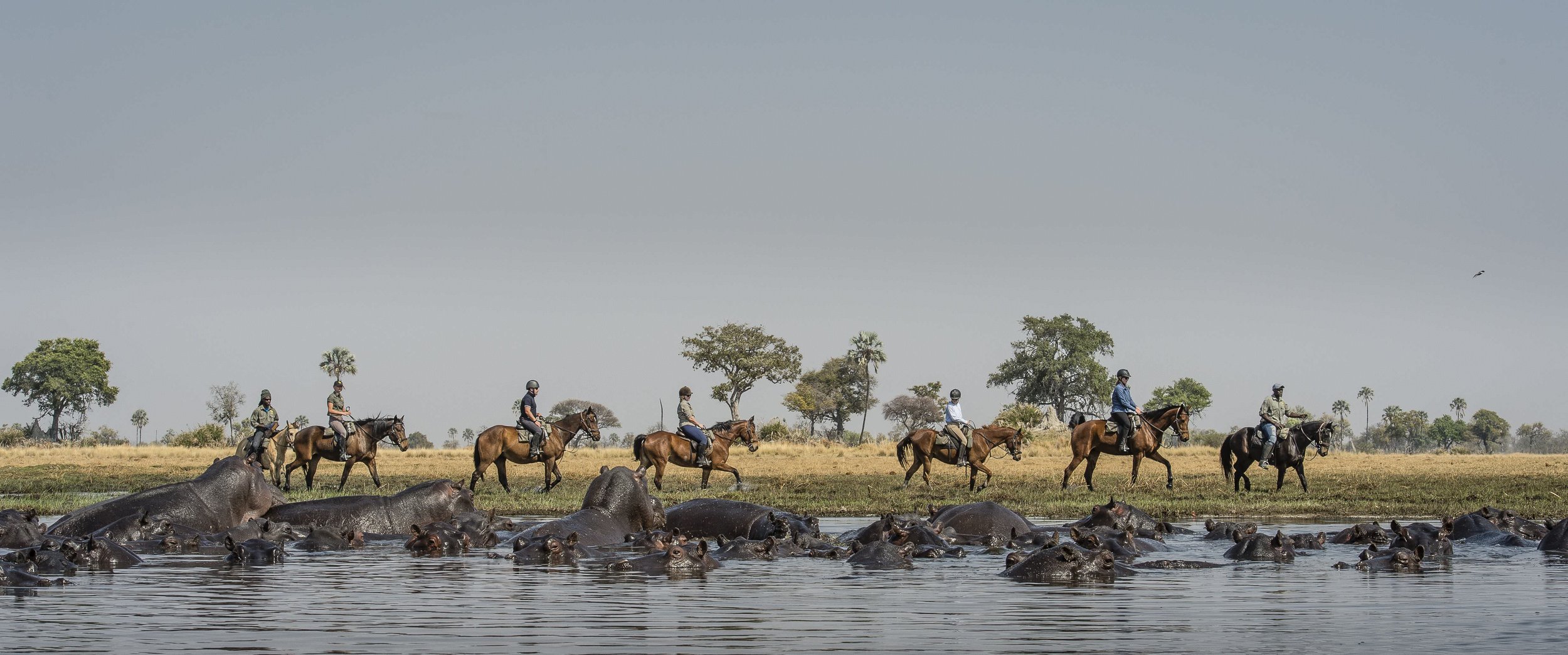
As well as being expected to work hard, trainees will have the opportunity to take horses on safari rides where appropriate, and experience the spectacular scenery and wildlife the Okavango Delta has to offer.
Horses give unparalleled access to the Delta, able to navigate narrow trails, splash through the many water courses, canter alongside herds of zebra and giraffe, or stand peacefully to observe.
What you can expect to gain from the programme
The programme offers unique and invaluable experience to those looking for careers in equine fields, veterinary, travel and tourism, hospitality, the safari industry, outdoor activities, or careers involving logistics and operations.
Trainees will gain a myriad of transferrable skills; communication, leadership, problem-solving, adaptability, team work, planning, working in remote areas, time management, cultural awareness.
A Typical Day
5.30/6am – Wake up and grab a bite to eat from the kitchens before reporting to the stables. Assist with feeding, grooming horses and anything else required.
6.30/7am – Get the horses ready for morning rides, then schooling at base camp or riding out in the bush, either with guests or separately with an experienced member of the equine team. As well as young horses, there are plenty of older horses who benefit from schooling sessions to keep them supple and responsive.
8.30am – The rest of the herd goes out to graze - volunteers can help with this if not riding.
11/12pm – Help to wash down and check horses returning from the morning safari ride, then take them to graze with the rest of the herd.
1pm – Lunch.
1-3pm – Midday rest – a good opportunity to have a siesta, or read a book by the pool. Volunteers are encouraged to pursue a personal project in this time whether that be a journal, photography, or wildlife study.
3pm – Stable duties – this could include record keeping, tack checks and cleaning, stock checks, assisting with maintenance tasks, or helping to get horses ready for a PM ride.
4pm –Tea time for guests, followed by an afternoon activity; volunteers may have the opportunity to join a guided walk, game drive or perhaps join a boat trip when water levels allow. This is at the discretion of the management and only when appropriate.
5pm – Assist with bringing in the herd from grazing. Help with applying fly spray, hoof oil, and with any veterinary issues then with feeding and getting the horses settled for the night.
6pm – Hot showers at your accommodation then dinner. You may be asked to assist with hosting guests.
This is only a suggestion of how a day may look. This may differ according to time of year (when it is hot you will ride earlier and there is a longer midday break), guest activities, and the many other factors that influence our remote camp.

Fees & Application
What is included?
Transfers from Maun airport (participants will be met at the airport), meals (all delicious, fresh food made by our catering team), drinks with meals, private accommodation and riding.
In addition, a UK representative will be available to assist with advice on flight booking, packing and logistics.
What is not included?
Flights to Maun, vaccinations, travel insurance.
Fees
£980/week, with a 2 week minimum stay. Reduced to £910/week after 2 weeks. Maximum stay of 10 weeks.
In the months of December, January and February a 25% discount is applied; fees are £735/week then £682.50/week.
These fees help us to cover the cost of meals, drinks (all food and drinks have to be transported into camp), accommodation, transfers and training.
Application Process
Applicants will be required to outline their relevant experience and send recent videos of them riding. This may be followed by an interview, online or in person. References may be requested. Due to the nature of the programme, schooling young and sometimes smaller horses, we have a weight limit of 75kg. We only accept trainees aged between 21 and 35.